LED Online Seminar 2017 - Working Group 5
--> Back to working group overview
Dear working group members. This is your group page and you will be completing the template gradually as we move through the seminar. Good luck and enjoy your collaboration!
Assignment 1 - Reading and Synthesizing Core Terminology
- You can read more details about this assignment here
- Readings are accessible via the resources page
Step 1: Your Landscape Democracy Manifestoes
-
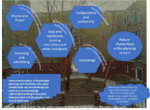 Sara's manifesto
 -
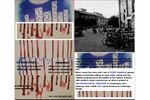 Eugenia's manifesto
 -
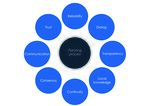 Julian's manifesto 1
 -
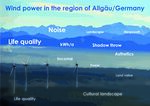 Julian's manifesto 2
 -
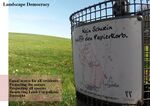 Mohamadreza's manifesto
 -
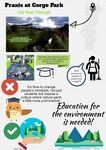 Tatiana's manifesto


.jpg)


Step 2: Define your readings
- Please add your readings selection for the terminology exercise before April 12:
A: Landscape and Democracy - Mapping the Terrain
- The European Landscape Convention (Tatiana Nascimento)
Landscape Concepts:
- Lynch, Kevin. (1960): The Image of the City, Cambridge, Mass.: MIT Press (Eugenia Valerio)
European Council of Spatial Planners
- European Charter on Participatory Democracy (under consultation) (Sara Christensen)
B: Concepts of Participation
- Hester, Randolph (1999): A Refrain with a View (Mohamadreza Youssefi)
- Gaventa, John: The Powerful, the Powerless, and the Experts (Julian Kurz)
C: Community and Identity
- Welk Von Mossner, Alexa (2014): Cinematic Landscapes (Mohamadreza Youssefi)
D: Designing
- Salgado, Mariana, et al. (2015): Designing with Immigrants (Eugenia Valerio)
E: Communicating a Vision
- 'Reading the Landscape' by Simon Bell, EMU Tartu (Tatiana Nasciemento)
Steps 3 and 4: Concepts Selection and definition
- Each group member selects three relevant concepts derived from his/her readings and synthesize them/publish them on the wiki by April 30, 2017
- Group members reflect within their groups and define their chosen concepts into a shared definition to be posted on the wiki by May 10, 2017.
- Other group members will be able to comment on the definitions until May 20, 2017
Concepts and definitions
Mohamadreza Youssefi:
- Concept 1: Participatory design
A holistic approach in designing by involving all actors/groups in designing process. This approach can be applied on many fields. The final outcomes of this approach are mostly responsive to the needs of communities.
- Concept 2: Civil disobedience
A type of law refusal in which people avoid any violence and insist to disobey laws peacefully. A concrete example can be Mahatma Gandhi.
- Concept 3: Advocacy planning
It is a kind of planning method which planners try to include the interests of all groups in societies. The most highlighted feature of this method is including low-income and minority groups with equal consideration in comparison to fluent and majority groups in planning.
Author 2: Sara Christensen
- Concept 1: Impact on spatial development
The “common ground” on which our life in society is based is the “common land” on which we live and where we exercise our rights under, and with a respect for, democracy: We must promote and protect our European democratic aspiration. That is done by continually revising them over time to reinvigorate them with the democratic ethos within which we shape the future development of our nations and local communities.
- Concept 2: Culture should be considered as the fourth pillar of sustainability.
No planning action is without cultural implications. Information, training and participation are strong culture-related factors.
- Concept 3: Involvement of individuals and communities in their definition of their living space.
The importance of true participatory democracy. It is important to include people into the spatial planning process because the decisions that are made will have impact on everyday life for people.
Tatiana:
- Concept 1: About European Landscape Convention
The European Council try to define goals about protection, planning and management, associated with the population that participate for make benefits for them all.
- Concept 2: Plannning and Design using LCA
- The scale that we will use this tool it needs to be more regional or national because for small scales it doesn't work so well.So is important to define some bigger areas to apply some types of tools and drawing methods.
Eugenia Valerio:
- Concept 1: The question of emotional involvement in design process.
To engage immigrants in partecipatory design research is important to create an atmosphere that inspire conversation. Through the method of "making togheter" (painting, writing, even eating togheter) people involved are facilited to open themselves up and describe their feelings and needs. So the researches perceive, among others things, emotional response from the people involved and even from themselves, and they have to reflect on which and how to use this emotions in a design project.
- Concept 2: The perception of landmarks.
Landmarks are point of reference external to the observer, with common characteristic of singularity, uniqueness and memorable in the context. A physical object becomes a landmark for its recognizability at many level of physical and spatial reference, but even for symbolic, historical and visual importance. Individuals have different perception and use of landmarks depending on the the familiarity they have with the city and the way they move through the city; they even choose personal landmarks that contribute to create their personal image of the city.
- Concept 3:Art of urban design and visual education.
The environment we live in should not only be functional but also a resource of beauty ... visual education can help develop a critical and attentive audience that will be able to be spontaneously active in the art of urban design.
Step 5: Reflection
- Please write, as a group, a 250 words reflection on your discourse and document it here
Civil disobedience is a type of law refusal in which people avoid any violence and insist to disobey laws peacefully. A concrete example can be Mahatma Gandhi. Participatory design is a holistic approach in designing by involving all actors/groups in designing process. This approach can be applied on many fields. The final outcomes of this approach are mostly responsive to the needs of communities. Advocacy planning is a method which planners try to include the interests of all groups in societies. The most highlighted feature of this method is including low-income and minority groups with equal consideration in comparison to fluent and majority groups in planning. Spatial planning policies have a major impact on people’s quality of life and quality of living spaces. They guide and support the choices as to where people live, express their cultural diversity, where business can be established, how public utilities and public services are distributed across the territories and how access to them is ensured. To engage people in participatory design project is important the method of making together, cause people feel closer to each other and in the project too. The perception of the public space is key element and public participation it will be crucial to the public spaces be adapted to the community. The scale is highly valued on it because it allows the user to (not) have access to certain places. Time is the main factor for change and is essential for the development of communities.
Step 6: Revised manifestoes
- please look again at your initial manifestoes and update them with any new aspects/perspectives you have taken up during this seminar
-
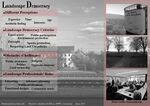 Mohamadreza's updated manifesto
 -
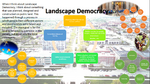 Sara Carolines's updated manifesto
 -
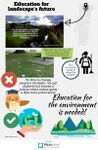 Tatiana's updated manifesto
 -
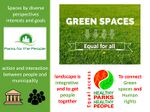 Eugenia's updated manifesto
 -
xy's updated manifesto


Assignment 2 - Your Landscape Symbols
- You can read more details about this assignment here
Landscape Symbols - Mohamadreza Youssefi Matak
-
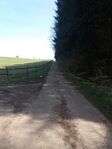 A clear visual border of forest and farmland separated by a path looks like fare to us. But as a matter of fact for ages, all species had been trying to own the majority of the natural landscape. Now it seems we as the most intellectual one could conquer all and determine the borders of ownership and shape the landscape by our own definition of the term "Democracy"! Welzheim, Germany
 -
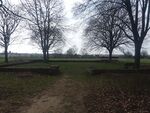 If we accept that definition for the term democracy is relative based on different periods of time, then this remained structure of the Roman watchtower could be a sign of democracy not for the people but for the empires. A built structure in natural landscape in order to make and keep the peace among rulers which has a reverse meaning for contemporary society today!48°53'11.5"N 9°38'02.0"E(Welzheim,Germany)
 -
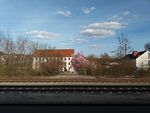 Access for all regardless of ethnic differences is one of the inevitable factors in landscape democracy which has been developed in various shapes from dirt road or track to railway. Indeed, it is a human right to have access the better places to benefit from the economic growth and social welfare.48°37'41.3"N 9°20'33.7"E(Nürtingen Bahnhof,Germany)


Landscape Symbols Julian Kurz
-
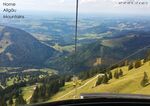 Hochgrad Germany
 -
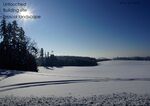 Wangen im Allgäu Germany
 -
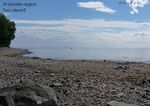 Lake Constance Germany


Landscape Symbols - Sara Caroline
-
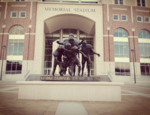 Memorial Stadium UNL, Statue of footballer players outside the sports stadium in UNL, A symbol of the American culture and the Universit, Nebraska, Lincoln
 -
 public area, in Lincoln , 40.819106, -96.699841
 -
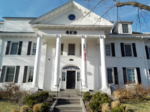 Huge American houses, The campus “fraternities” and “sororities”, your house is a symbole of wealth in a Democracy- houses that occupy the space, 40.819106, -96.699841


Landscape Symbols Tatiana
-
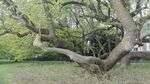 Location: Center of Zurich Symbol: Tree as a strong dominant living being on nature Of all living beings, the tree is one of those we most identify as a symbol of nature and the environment.
 -
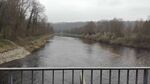 Location:Vaihingen an der Enz Symbol: River as a water source The river favors this landscape because of the advantages it offers to the environment.
 -
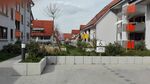 Location: Nuertingen City Symbol: Inclusive Gardens The garden in the middle of the two residential lots shows that its residents live and socialize in this area which makes it really interesting.


Landscape Symbols Eugenia Valerio
-
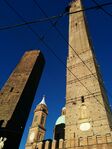 Asinelli and Garisenda Towers, Bologna, Italy - 44°29'39.9"N 11°20'48.4"E, historical symbols of the city: ancient symbol of supremacy, now benchmark of the heart of the city
 -
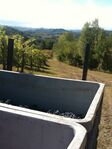 on the hills of Sasso Marconi (BO), Italy - nearby 44°26'19.1"N 11°12'25.1"E, the way it cultivates the vineyard is the symbol of our territory
 -
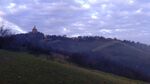 Sanctuary of the Madonna di San Luca, Bologna, Italy - 44°28'44.9"N 11°17'53.2"E, from the Sanctuary you can see the whole city, and when you see the Sanctuary from the plain you know you're at home
 -
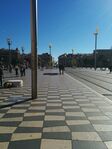 Place Massena, Nice Ville, France - 43°41'47.2"N 7°16'14.4"E, conscious public art in a touristic seaside town
 -
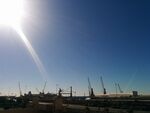 the port of Genova, Italy - from 44°24'12.6"N 8°55'52.2"E, unconscious industrial public art in a harbor city


Assignment 3 - Role Play on Landscape Democracy "movers and shakers"
- You can read more details about this assignment here
Eugenia Valerio: Alessandra Orofino
Mohamadreza Youssefi: Samuel Mockbee
Tatiana Nascimento: Monika B. Arzberger
Sara Caroline: Jan Gehl
Assignment 4 - Your Landscape Democracy Challenge
- You can read more details about this assignment here
- Each group member will specify a landscape democracy challenge in his/her environment
Landscape Democracy Challenge- Mohamadreza Youssefi
- Respecting Land use policy
-
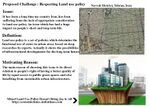 caption: The main reason of choosing this issue is its direct relation to people’s right of having a better quality of life by equal access to public green spaces and also benefiting from sustainable urban infrastructure.
 -
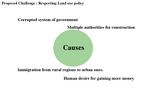 Causes
 -
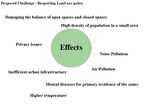 Effects
 -
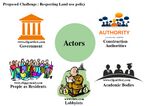 Actors


Your references:
- ...
- ...
Landscape Democracy Challenge - Tatiana Nascimento
- Give a title to your challenge
-
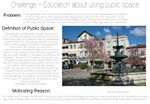 caption: why did you select this case?
 -
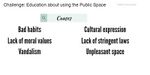 caption: what is the issue/conflict (1)
 -
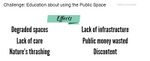 caption: what is the issue/conflict (2)
 -
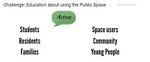 caption: who are the actors?


Your references:
- "ESPAÇO PÚBLICO E CIDADANIA Usos e Manifestações Urbanas"Silva L.,Rio de Janeiro 2009 adapted
Landscape Democracy Challenge - Sara Caroline Christensen
- Give a title to your challenge
-
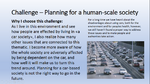 caption: why did you select this case?
 -
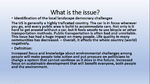 caption: what is the issue/conflict (1)
 -
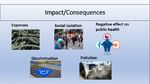 caption: who are effected (2)
 -
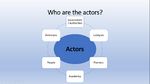 caption: who are the actors?


Your references:
- ...
- ...
Landscape Democracy Challenge - Eugenia Valerio
- Yes, in my backyard!
-
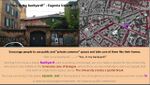 caption: why did you select this case?
 -
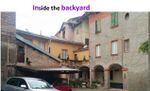 caption: what is the issue/conflict (1) A private common space used only for car and bike parking and for storage of not used objects ----> A green backyard as point of reference for people who live in the neighborhood
 -
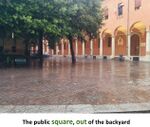 caption: what is the issue/conflict (2) A public space with a poor quality urban design ---> An anjoyable public space where the community of inhabitants can meet users of this area
 -
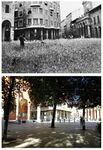 caption: who are the actors? Down to top movement: inhabitants, students, workers (University, Municipality only marginal)


Your references:
- ...
- ...
Assignment 5 - Your Democratic Change Process
- You can read more details about this assignment here
- After documenting and reflecting on your challenges you will continue jointly with one of these challenges and design a democratic change process
Your Democratic Change Process
- How to make people take care of public spaces
-
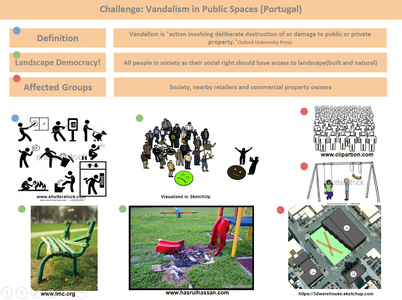 a power map identifying who is affected by the challenge and who is influencing it
 -
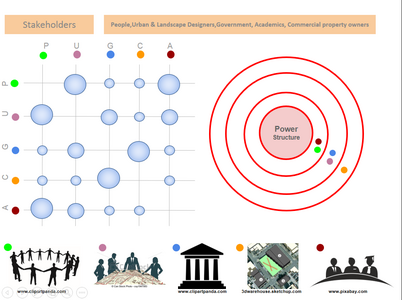 a power map identifying who is affected by the challenge and who is influencing it
 -
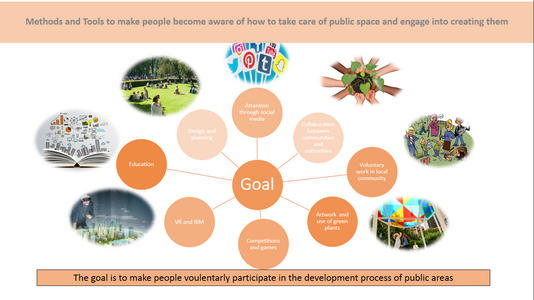 Look at the various methods and tools available and think how they can be applied creatively. Think about the needs of different stakeholder groups - you may need a methodical mix to address them all. Illustrate graphically how these methods/tools might be applied in a short, medium and long-term perspective.
 -
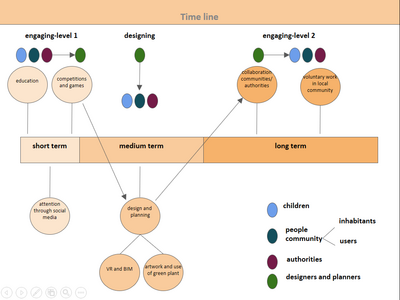 a scenario illustrating how these tools can be applied within a short, medium and long term perspective involving the groups you want to address, this should include a process timeline
 -
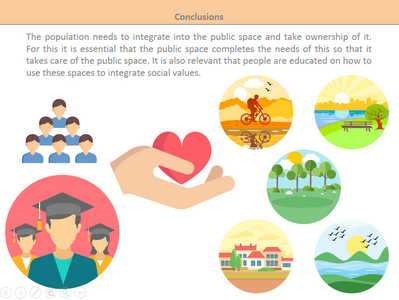 Conclusion


Reflection
- Evaluate in the group how far your ideas either built on the theoretical frame that has been introduced to you during this seminar or react to this by filling a potential gap (approx 150 words)
In our case study we have taken a public park in Portugal where we try to describe one or more methods to stop people who vandalize / destroy this park in Portugal. Some of our ideas had been on including people more in the process of designing the parks, and work together to maintain it, and also facilitate activities which will bring people together and use the public space togheter. However, we have also filled a potential gap by extanding our methods to be used in other public spaces as well. We have also discussed the potential in using new technological equipment such as Virtual Riality googles and Building Information Modeling. This equipmet can be helpful to include different people (ages and social status, and people with different disabilities) and take use of their ideas and values in the planning process, but also encurage people to use and take care of public spaces in their local community.
Your references
- ....
- ....
- ....
- ....