LED Online Seminar 2017 - Working Group 10
--> Back to working group overview
Dear working group members. This is your group page and you will be completing the template gradually as we move through the seminar. Good luck and enjoy your collaboration!
Assignment 1 - Reading and Synthesizing Core Terminology
- You can read more details about this assignment here
- Readings are accessible via the resources page
Step 1: Your Landscape Democracy Manifestoes
-
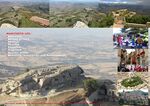 Angelo's manifesto
 -
 Fouad's manifesto
 -
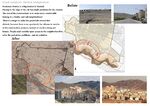 Maliheh's manifesto
 -
 Niels' manifesto
 -
 Yinglan's manifesto


Step 2: Define your readings
- Please add your readings selection for the terminology exercise before April 12:
A: Landscape and Democracy - Mapping the Terrain
- Landscape Democracy Resolution (Angelo.l)
Landscape Concepts:
B: Concepts of Participation
C: Community and Identity
- Hester, Randolph (2006): Design for Ecological Democracy, The MIT Press
D: Designing
- Pritzker Prize winning architect Alejandro Aravena on sustainable design and community involvement in Chile (Angelo.l)
- additional: Niels De Couvreur => Smith, Nicola Dawn(2012): Design Charrette: A Vehicle for Consultation or Collaboration
E: Communicating a Vision
- Niels De Couvreur => 'Reading the Landscape' by Simon Bell, EMU Tartu
Steps 3 and 4: Concepts Selection and definition
- Each group member selects three relevant concepts derived from his/her readings and synthesize them/publish them on the wiki by April 30, 2017
- Group members reflect within their groups and define their chosen concepts into a shared definition to be posted on the wiki by May 10, 2017.
- Other group members will be able to comment on the definitions until May 20, 2017
Concepts and definitions
Author 1:
- Concept 1
- add you definition here with 2-3 concise sentences. Do not copy paste text from others, use your own words. Make reference to resources used.
- Concept 2
- .....
- Concept 3
- ....
Author 2:
- ......
- .......
- .......
Author 3:
- ......
- .......
- .......
Author 4:
- ......
- .......
- .......
Step 5: Reflection
- Please write, as a group, a 250 words reflection on your discourse and document it here
Step 6: Revised manifestoes
- please look again at your initial manifestoes and update them with any new aspects/prespectives you have taken up during this seminar
-
xy's updated manifesto
-
xy's updated manifesto
-
xy's updated manifesto
-
xy's updated manifesto
-
xy's updated manifesto
Assignment 2 - Your Landscape Symbols
- You can read more details about this assignment here
Landscape Symbols Author 1
-
 this symbols represent the history of my city and the people's chronology history that conquered this place
 -
 Federico II of Svevia, king of Sicily and holy roman empire between 1200 he built the octagonal tower, geodetic reference point for the whole island (27m)
 -
 For sicani, Enna was a military stronghold. When it was conquered by the Greeks, they built on the Rock, a great pagan temple dedicated to Ceres, the goddess of the harvest, of which today we have no remains
 -
 Born almost three millennia ago as a refuge from invaders, allowed to Henna to be relevant at the time of the Greek colonization and strenuous resistance to the Romans,that making assigning the title of Urbs Inexpugnablis and Umbilicus Siciliae, for its geographical position.


Landscape Symbols of Fouad Mulla
-
 Buda Hill - The Hungarian Kingdom History figure dominate the city as the highest place beside the historican value
 -
 Hungarian Parliament Building - Buda side It is currently the largest building in Hungary and still the tallest building in Budapest
 -
add a caption (one paragraph max) description of the symbolism, interpretation, as well as geo-location
-
add a caption (one paragraph max) description of the symbolism, interpretation, as well as geo-location
-
add a caption (one paragraph max) description of the symbolism, interpretation, as well as geo-location


Landscape Symbols of Yinglan
-
 The Ruins of St. Paul's - It includes what was originally St. Paul's College and the Church of St. Paul also known as "Mater Dei", a 17th-century Portuguese church dedicated to Saint Paul the Apostle. Today, the ruins are one of Macau's best known landmarks.
 -
 The Lotus Square - is an open square in , Macau, China. The area features the large bronze sculpture Lotus Flower In Full Bloom .
 -
 The fortress - was built between 1622 and 1638. Inside the fortress stands Guia Chapel, originally established by Clarist nuns, who resided at the site before establishing the Convent of St. Clare. The chapel's elaborate frescoes depict representations of both western and Chinese themes, displaying motifs of religious and mythological inspiration that are a perfect example of Macao's multicultural dimension.
 -
add a caption (one paragraph max) description of the symbolism, interpretation, as well as geo-location
-
add a caption (one paragraph max) description of the symbolism, interpretation, as well as geo-location


Landscape Symbols Niels De Couvreur
-
 Left: church in near hometown where people feel a strong connection to it. Recognition of the church tower from big distances, 51.204600, 3.517315
 -
Right under: old bridge on rail track Bruges-Eeklo, 51.203997, 3.515540
-
Right up: Townhall of Maldegem, Symbol of the hometown, strong pride of origin, 51.208997, 3.445394
-
add a caption (one paragraph max) description of the symbolism, interpretation, as well as geo-location
-
add a caption (one paragraph max) description of the symbolism, interpretation, as well as geo-location


Landscape Symbols Author 5
-
add a caption (one paragraph max) description of the symbolism, interpretation, as well as geo-location
-
add a caption (one paragraph max) description of the symbolism, interpretation, as well as geo-location
-
add a caption (one paragraph max) description of the symbolism, interpretation, as well as geo-location
-
add a caption (one paragraph max) description of the symbolism, interpretation, as well as geo-location
-
add a caption (one paragraph max) description of the symbolism, interpretation, as well as geo-location
Assignment 3 - Role Play on Landscape Democracy "movers and shakers"
- You can read more details about this assignment here
Assignment 4 - Your Landscape Democracy Challenge
- You can read more details about this assignment here
- Each group member will specify a landscape democracy challenge in his/her environment
Landscape Democracy Challenge 1
- Give a title to your challenge
-
caption: why did you select this case?
-
caption: what is the issue/conflict (1)
-
caption: what is the issue/conflict (2)
-
caption: who are the actors?


Your references:
- ...
- ...
Landscape Democracy Challenge 2
- Give a title to your challenge
-
caption: why did you select this case?
-
caption: what is the issue/conflict (1)
-
caption: what is the issue/conflict (2)
-
caption: who are the actors?
Your references:
- ...
- ...
Landscape Democracy Challenge 3
- Give a title to your challenge
-
caption: why did you select this case?
-
caption: what is the issue/conflict (1)
-
caption: what is the issue/conflict (2)
-
caption: who are the actors?
Your references:
- ...
- ...
Landscape Democracy Challenge 4
- Give a title to your challenge
-
caption: why did you select this case?
-
caption: what is the issue/conflict (1)
-
caption: what is the issue/conflict (2)
-
caption: who are the actors?
Your references:
- ...
- ...
Landscape Democracy Challenge 5
- Give a title to your challenge
-
caption: why did you select this case?
-
caption: what is the issue/conflict (1)
-
caption: what is the issue/conflict (2)
-
caption: who are the actors?
Your references:
- ...
- ...
Assignment 5 - Your Democratic Change Process
- You can read more details about this assignment here
- After documenting and reflecting on your challenges you will continue jointly with one of these challenges and design a democratic change process
Your Democratic Change Process
- Add the title of your project
-
a power map identifying who is affected by the challenge and who is influencing it
-
Look at the various methods and tools available and think how they can be applied creatively. Think about the needs of different stakeholder groups - you may need a methodical mix to address them all. Illustrate graphically how these methods/tools might be applied in a short, medium and long-term perspective.
-
a scenario illustrating how these tools can be applied within a short, medium and long term perspective involving the groups you want to address, this should include a process timeline

.jpg)

Reflection
- Evaluate in the group how far your ideas either built on the theoretical frame that has been introduced to you during this seminar or react to this by filling a potential gap (approx 150 words)
Your references
- ....
- ....
- ....
- ....