LED Online Seminar 2018 - Working Group 11
--> Back to working group overview
Dear working group members. This is your group page and you will be completing the template gradually as we move through the seminar. Good luck and enjoy your collaboration!
Assignment 1 - Reading and Synthesizing Core Terminology
- You can read more details about this assignment here
- Readings are accessible via the resources page
Step 1: Your Landscape Democracy Manifestoes
-
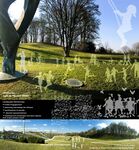 Sam's manifesto
 -
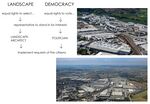 Sabine's manifesto
 -
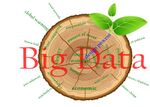 Seyyed's manifesto
 -
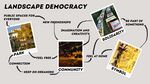 Giulia Martina's manifesto


Step 2: Define your readings
- Please add your readings selection for the terminology exercise before April 18:
A: Landscape and Democracy
B: Concepts of Participation
C: Community and Identity
D: Designing
E: Communicating a Vision
Steps 3 and 4: Concepts Selection and definition
- Each group member selects three relevant concepts derived from his/her readings and synthesize them/publish them on the wiki by May 9, 2018
- Group members reflect within their groups and define their chosen concepts into a shared definition to be posted on the wiki by June 6, 2018.
- Other group members will be able to comment on the definitions until June 12, 2018
- Each group will also report on their process to come to a set of shared definitions of key landscape democracy concepts on the wiki documentation until June 20, 2018
Concepts and definitions
Author 1: ...
- ......
- .......
- .......
Author 2: ...
- ......
- .......
- .......
Author 3: ...
- ......
- .......
- .......
Author 4: ...
- ......
- .......
- .......
Step 5: Reflection
Step 6: Revised manifestoes
- please look again at your initial manifestoes and update them with any new aspects/prespectives you have taken up during this seminar
-
 Author's updated manifesto
 -
Author's updated manifesto
-
Author's updated manifesto
-
Author's updated manifesto

Assignment 2 - Your Landscape Symbols
- You can read more details about this assignment here
Landscape Symbols Author 1: Sam Nasser
-
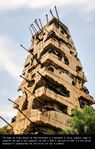 The Hope for Peace (Espoir de Paix) Monument is a monument in Yarze, Lebanon, made to celebrate the end of the Lebanese Civil War in 1990. It was built in 1995. It is the official monument to commemorate the end of the civil war in Lebanon.
 -
description
-
description

Landscape Symbols Author 2: Sabine Schneider
-
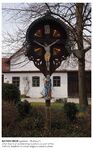 often found at outstanding locations as part of the catholic tradition to cause religious consciousness
 -
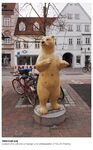 subject of a cultural campaign and ambassador of the city; located at many places in Freising
 -
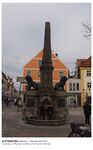 reminder of the war victims; located in Obere Hauptstraße Freising


Landscape Symbols Author 3: Markus Herrmann
-
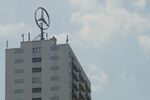 The so called "Sternhochhaus / stern-skyscraper" is one of the many symbols of the city of Kassel and named after the mercedes star, that the close by Mercedes factory uses as advertisment since the 70s. The skyscraper is one of the highest in Kassel (55 m). It also symbolizes the entrance to the city coming from the University at the Holländische Platz and is also a well known meeting point (tram station "Am Stern". Furthermore it shows the industrial history of the city.
 -
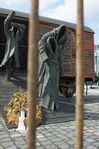 It is a memorial on the campus of the university of Kassel showing the deportation trains that departed from the university campus (former factory area). The university was build on the former Henschel factory, which also deported many jews / forced laborers during the NS-regime.
 -
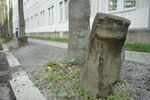 It is an art piece of the artist Joseph Beuys, that he created during the Documenta in 1982. 7000 oak trees are spread over the whole city and are marked by the basalt stones at the base of the trees. It is a symbol for the close connection of Kassel and the Documenta art exhibition.


Landscape Symbols Author 4: Giulia Martina Bosi
-
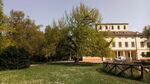 Ginkgo Biloba is a symbol of my city (Formigine). Each citizen and every visitor of the city linked the park to this tree. This park and the tree are the heart of the city, so all the people that live here can connect easly themselves to this three.
 -
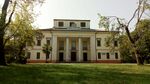 This is the pubblic library where all the people of the city always go to read a book inside, to study, or to participate in lecture laboratory.
 -
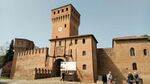 This is the castle: the old symbol of the city, symbol that connects us to our twin cities, and place where people can get inside and relax in its beautiful garden.


Landscape Symbols Author 5:seyyed mohammadmahdi hosseinikia
-
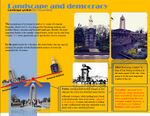 The mausoleum of Avicenna located at the center of a Square, Hamedan, IRAN (1952). It is designed by Hooshang seyhoun and includes library, museum and beautiful landscape. Besides, the most important feature is the spindle- shaped tower, easily can be seen from vicinity. This tower generously gives spectacular view to everyone.In the past maybe for 4 decades, this tower hadn’t has any special meaning for people and the fundamental essence of it was the monument for Avicenna.
 -
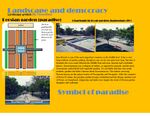 Iran (Persia) is one of the most important countries in the Middle East. It has a very long tradition of garden-making, though no one can be sure quite how long. Because it bestrides the cross-roads between the Middle East and Asia, Iran has had a turbulent history. Zoroastrianism was a religion of settlers, as opposed to nomads, and the early Zoroastrians undoubtedly had vegetable gardens. It is probable that they also made aesthetic gardens but little is known about Zoroastrian art. The earliest surviving Persian layouts are the palace estates of Passargadae and Persepolis. After the conquest of Persia by Islam, the paradise garden became established and the Islamic gardens east of Persia, in Samarkand, Afganistan and India were largely the work of Persian garden designers and craftsmen
 -
![The Azadi Tower (Borje Āzādi; "Freedom Tower"), formerly known as the Shahyad Tower (برج شهیاد Borje Ŝahyād; "Shah's Memorial Tower"), is a monument located at Azadi Square, in Tehran, Iran. It is one of the landmarks of Tehran, marking the west entrance to the city, and is part of the Azadi Cultural Complex, which also includes a museum underground. The tower is about 45 metres (148 ft) tall and is completely clad in cut marble.[1][2] It was commissioned by Mohammad Reza Pahlavi, the last Shah of Iran, to mark the 2,500th year of the foundation of the Imperial State of Iran](/images/thumb/a/a7/LED_landscape_symbol_kia_jpg3.jpg/150px-LED_landscape_symbol_kia_jpg3.jpg) The Azadi Tower (Borje Āzādi; "Freedom Tower"), formerly known as the Shahyad Tower (برج شهیاد Borje Ŝahyād; "Shah's Memorial Tower"), is a monument located at Azadi Square, in Tehran, Iran. It is one of the landmarks of Tehran, marking the west entrance to the city, and is part of the Azadi Cultural Complex, which also includes a museum underground. The tower is about 45 metres (148 ft) tall and is completely clad in cut marble.[1][2] It was commissioned by Mohammad Reza Pahlavi, the last Shah of Iran, to mark the 2,500th year of the foundation of the Imperial State of Iran
The Azadi Tower (Borje Āzādi; "Freedom Tower"), formerly known as the Shahyad Tower (برج شهیاد Borje Ŝahyād; "Shah's Memorial Tower"), is a monument located at Azadi Square, in Tehran, Iran. It is one of the landmarks of Tehran, marking the west entrance to the city, and is part of the Azadi Cultural Complex, which also includes a museum underground. The tower is about 45 metres (148 ft) tall and is completely clad in cut marble.[1][2] It was commissioned by Mohammad Reza Pahlavi, the last Shah of Iran, to mark the 2,500th year of the foundation of the Imperial State of Iran


![The Azadi Tower (Borje Āzādi; "Freedom Tower"), formerly known as the Shahyad Tower (برج شهیاد Borje Ŝahyād; "Shah's Memorial Tower"), is a monument located at Azadi Square, in Tehran, Iran. It is one of the landmarks of Tehran, marking the west entrance to the city, and is part of the Azadi Cultural Complex, which also includes a museum underground. The tower is about 45 metres (148 ft) tall and is completely clad in cut marble.[1][2] It was commissioned by Mohammad Reza Pahlavi, the last Shah of Iran, to mark the 2,500th year of the foundation of the Imperial State of Iran](/index.php?title=File:LED_landscape_symbol_kia_jpg3.jpg)
Assignment 3 - Role Play on Landscape Democracy "movers and shakers"
- You can read more details about this assignment here
Assignment 4 - Your Landscape Democracy Challenge
- You can read more details about this assignment here
- Each group member will specify a landscape democracy challenge in his/her environment
Landscape Democracy Challenge 1
- Give a title to your challenge
-
caption: why did you select this case?
-
caption: what is the issue/conflict (1)
-
caption: what is the issue/conflict (2)
-
caption: who are the actors?


Your references:
- ...
- ...
Landscape Democracy Challenge 2
- Give a title to your challenge
-
caption: why did you select this case?
-
caption: what is the issue/conflict (1)
-
caption: what is the issue/conflict (2)
-
caption: who are the actors?
Your references:
- ...
- ...
Landscape Democracy Challenge 3
- Give a title to your challenge
-
caption: why did you select this case?
-
caption: what is the issue/conflict (1)
-
caption: what is the issue/conflict (2)
-
caption: who are the actors?
Your references:
- ...
- ...
Landscape Democracy Challenge 4
- Give a title to your challenge
-
caption: why did you select this case?
-
caption: what is the issue/conflict (1)
-
caption: what is the issue/conflict (2)
-
caption: who are the actors?
Your references:
- ...
- ...
Landscape Democracy Challenge 5
- Give a title to your challenge
-
caption: why did you select this case?
-
caption: what is the issue/conflict (1)
-
caption: what is the issue/conflict (2)
-
caption: who are the actors?
Your references:
- ...
- ...
Assignment 5 - Your Democratic Change Process
- You can read more details about this assignment here
- After documenting and reflecting on your challenges you will continue jointly with one of these challenges and design a democratic change process
Your Democratic Change Process
- Add Title
-
caption: ...
-
caption: ...
-
caption: ...
-
caption: ...


Reflection
- ....
- ....
- ....
Conclusion:
- ....
- ....
- ....
Your references
- ...
- ...
- ...