LED Online Seminar 2017 - Working Group 9
--> Back to working group overview
Dear working group members. This is your group page and you will be completing the template gradually as we move through the seminar. Good luck and enjoy your collaboration!
Assignment 1 - Reading and Synthesizing Core Terminology
- You can read more details about this assignment here
- Readings are accessible via the resources page
Step 1: Your Landscape Democracy Manifestoes
-
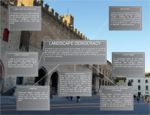 Luca's manifesto 1
 -
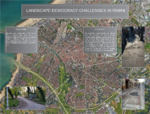 Luca's manifesto 2
 -
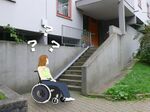 Florian's manifesto 1
 -
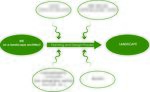 Florian's manifesto 2
 -
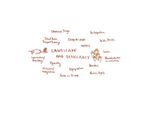 Melane's manifesto 1
 -
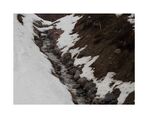 Malene's manifesto 2
 -
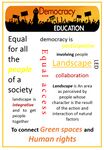 Negar's manifesto 1
 -
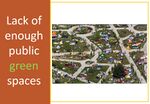 Nagar's manifesto 2


.JPG)

Step 2: Define your readings
- Please add your readings selection for the terminology exercise before April 12:
A: Landscape and Democracy - Mapping the Terrain
Landscape Concepts:
- Lynch, Kevin. (1960): The Image of the City, Cambridge, Mass.: MIT Press (Luca)
B: Concepts of Participation
- Gaventa, John: The Powerful, the Powerless, and the Experts (Florian)
C: Community and Identity
- Welk Von Mossner, Alexa (2014): Cinematic Landscapes, In: Topos, No. 88, 2014. (Negar Rezaei Azghandi)
D: Designing
- Salgado, Mariana, et al. (2015): Designing with Immigrants (Malene)
E: Communicating a Vision
Steps 3 and 4: Concepts Selection and definition
- Each group member selects three relevant concepts derived from his/her readings and synthesize them/publish them on the wiki by April 30, 2017
- Group members reflect within their groups and define their chosen concepts into a shared definition to be posted on the wiki by May 10, 2017.
- Other group members will be able to comment on the definitions until May 20, 2017
Concepts and definitions
Author 1: Florian
- the knowledge society [Gaventa, John: The Powerful, the Powerless, and the Experts]
- Society has shiftet from an industrial one to a "knowledge society". Nowadays the knowledge producing industries like education, reasearch, development, media and communication are the most important ones. Scientific expertise is of a higher value than experience. Thereby people are disadvantaged and more powerless by having less scientific knowledge.
- research with the people [Gaventa, John: The Powerful, the Powerless, and the Experts]
- To narrow the gap of knowledge in society, professionals need to research with the people. Thereby socially powerless groups can get into action. The researcher (the expert) starts with questions risen by the powerless groups and gives them back comprehensive information.
- towards a knowledge democracy [Gaventa, John: The Powerful, the Powerless, and the Experts]
- The economic production is controlled by a few people of dominant knowledge. This needs to be changed to realize a real political democracy.
Author 2: Negar Rezaei Azghandi
- [Welk Von Mossner, Alexa (2014): Cinematic Landscapes, In: Topos, No. 88, 2014]
- Exposing the landscape crisis for the society and people through the movies, because sometimes the natural environment are interfered by the human.
- [Welk Von Mossner, Alexa (2014): Cinematic Landscapes, In: Topos, No. 88, 2014]
- Utilization of real landscape in making a movie as a cinematic landscape. Because, Cinematic landscape is often the result of all kinds of trickery.
- [Welk Von Mossner, Alexa (2014): Cinematic Landscapes, In: Topos, No. 88, 2014]
- Importance of authenticity of landscape especially for making films when it plays an important role and also using the landscape as a kind of mirror of feelings.
Author 3:
- ......
- .......
- .......
Author 4:
- ......
- .......
- .......
Step 5: Reflection
- Please write, as a group, a 250 words reflection on your discourse and document it here
Step 6: Revised manifestoes
- please look again at your initial manifestoes and update them with any new aspects/prespectives you have taken up during this seminar
-
xy's updated manifesto
-
xy's updated manifesto
-
xy's updated manifesto
-
xy's updated manifesto
-
xy's updated manifesto
Assignment 2 - Your Landscape Symbols
- You can read more details about this assignment here
Landscape Symbols Author 1: Negar Rezaei Azghandi
-
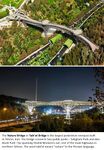 The Nature Bridge or Tabi'at Bridge is the largest pedestrian overpass built in Tehran, Iran. The bridge connects two public parks—Taleghani Park and Abo-Atash Park—by spanning Shahid Modarres ave, one of the main highways in northern Tehran. The word tabi’at means "nature" in the Persian language.
 -
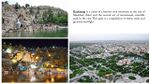 Koohsangi is a name of a famous rock mountain in the city of Mashhad (Iran) and the second set of recreational, scientific park in the city. This park is a compilation of water, rocks and greenery and light.
 -
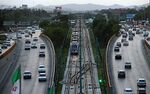 Vakil Abad, is one of the largest boulevard in the city of mashhad (Iran). the first urban train passes through it and at the end of the route, is connected two recreation and tourism areas that called Torghabeh and Shandiz.


Landscape Symbols Author: Luca Maresi
-
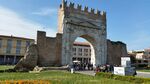 The "Augusto's Arch" (Augusti fornix) is the main symbol of Rimini and of its roman origins. Ones covered by buildings was freed during the fascist regim and returned to its former glory as gate to the historical heart of the modern city. (Luca Maresi)
 -
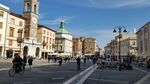 The economical hand social heart of the city, housing the principal shops, pubs and cafes, "Tre Martiri Square" (Piazza Tre Martiri) owns its name to a tragical episode occurred during the World War II when three partisans were hanged by the german troops. (Luca Maresi)
 -
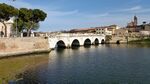 The "Tiberio's Bridge" (Tiberii pons) stands firmly connecting the historical centre of the city to the ancient medieval district across the Marecchia river. It's the proof of Roman's superior engeneering fullfilling its function thousands of years later. (Luca Maresi)


Landscape Symbols Author 3: Florian Matthies
-
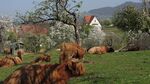 Open air museum in Beuren, Germany (N48° 36.395'/E9° 25,838') Cultural landscape with old half-timbered houses and historic landuse. They practice traditional handcraft and agriculture to prevent traditions going lost.
 -
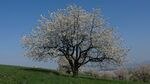 Apple orchard (N48° 36,395'/E9° 25,838')typical cultural landscape in the Swabian Alb, Germany, strong connection to native land and agricultural history, high value for recreational activities.
 -
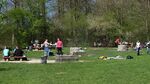 Outdoor barbecue area (N48° 36,772'/E9° 22,697') important spot for meeting people and socialization in the landscape for recreational activities and eating together. Coming in contact to natural resources and elements such as gathering firewood and making fire.


Landscape Symbols Author 4: Malene Eiksund
-
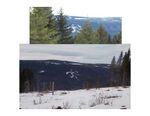 This man is cut out in the mountain of the city of Lillehammer in Norway. The city was the place of the winter Olympics in 1994 and the man is carrying the olympic fire. In the old Greece fire symbolised a connection with the Gods.The Olympic games and sports was a way that man could be close to the Gods.
 -
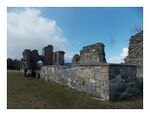 This is the riuns of a monastary located on an island called Tautra in the middle of Norway. The ruins are well visited and symbolises the old history and traditions especially for handcrafts like beer making and soap making. These traditions are followed on by the people living at the island today.
 -
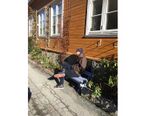 This is a publiv bench in a part og the city of Trondheim, Norway called Bakklandet. It is a pittoresque quarter. The bench is places by the private people living in the house, but is for public use. This bench is a symbol of private people taking charge of making their city friendly and liveable.


Assignment 3 - Role Play on Landscape Democracy "movers and shakers"
- You can read more details about this assignment here
Assignment 4 - Your Landscape Democracy Challenge
- You can read more details about this assignment here
- Each group member will specify a landscape democracy challenge in his/her environment
Landscape Democracy Challenge 1: Negar Rezaei Azghandi
- Give a title to your challenge
-
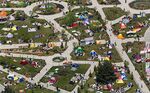 caption: why did you select this case? To connect green spaces and human
 -
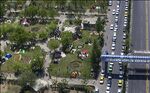 caption: what is the issue/conflict (1)? Lack of enough public landscape
 -
caption: what is the issue/conflict (2)
-
caption: who are the actors?


Your references:
- ...
- ...
Landscape Democracy Challenge 2
- Give a title to your challenge
-
caption: why did you select this case?
-
caption: what is the issue/conflict (1)
-
caption: what is the issue/conflict (2)
-
caption: who are the actors?


Your references:
- ...
- ...
Landscape Democracy Challenge 3
- Give a title to your challenge
-
caption: why did you select this case?
-
caption: what is the issue/conflict (1)
-
caption: what is the issue/conflict (2)
-
caption: who are the actors?
Your references:
- ...
- ...
Landscape Democracy Challenge 4
- Give a title to your challenge
-
caption: why did you select this case?
-
caption: what is the issue/conflict (1)
-
caption: what is the issue/conflict (2)
-
caption: who are the actors?
Your references:
- ...
- ...
Landscape Democracy Challenge 5
- Give a title to your challenge
-
caption: why did you select this case?
-
caption: what is the issue/conflict (1)
-
caption: what is the issue/conflict (2)
-
caption: who are the actors?
Your references:
- ...
- ...
Assignment 5 - Your Democratic Change Process
- You can read more details about this assignment here
- After documenting and reflecting on your challenges you will continue jointly with one of these challenges and design a democratic change process
Your Democratic Change Process
- Add the title of your project
-
a power map identifying who is affected by the challenge and who is influencing it
-
Look at the various methods and tools available and think how they can be applied creatively. Think about the needs of different stakeholder groups - you may need a methodical mix to address them all. Illustrate graphically how these methods/tools might be applied in a short, medium and long-term perspective.
-
a scenario illustrating how these tools can be applied within a short, medium and long term perspective involving the groups you want to address, this should include a process timeline

.jpg)

Reflection
- Evaluate in the group how far your ideas either built on the theoretical frame that has been introduced to you during this seminar or react to this by filling a potential gap (approx 150 words)
Your references
- ....
- ....
- ....
- ....