Budapest-Vác Living Lab
OLA Partners for the Budapest-Vác Living Lab
- Local living lab promoters: MATE - Hungarian University for Agriculture and Life Sciences (university partner) and KulturAktív (NGO partner)
- Upcoming OLA activities: International Student Competition (Sept 24 - Jan 25), Summer School and Landscape Forum (June 2025), and ongoing cooperation with schools
Video Impressions of our Living Lab Activities
Background of the Budapest-Vác Living Lab
Transformation of the LADDER Living Lab – OLA Focus on Vác
The LADDER Living Lab began as a platform for involving children and young people in the democratic transformation of their everyday environments. After several years of community-based schoolyard design, the Living Lab broadened its mission toward a larger goal: supporting child-friendly urban development through democratic landscape transformation.
Building on the “Shape Your School” brand and earlier schoolyard co-design projects, the Living Lab expanded its scope to engage not only individual schools but the wider community of Vác. This shift allowed us to explore how children and families experience the city and how their perspectives can actively shape urban planning.
Achievements in Vác
Deepened community involvement: The Living Lab established strong cooperation with local institutions, schools, NGOs, municipal actors, and residents. A series of community discussions, workshops, and public events brought together families, teachers, merchants, cultural institutions, environmental educators, seniors, and youth. These activities helped gather collective memories, map beloved places, and identify barriers to independent mobility and access to nature.
School-based learning and co-design: Landscape architecture students facilitated interactive sessions in several primary schools in Vác. These activities combined environmental education with participatory design, enabling children to express how they connect with nature and what improvements they envision for their school grounds and neighbourhoods. Students also conducted research to understand children’s perceptions of green spaces and the broader urban environment.
City-wide research and community mapping: The Living Lab carried out an extensive survey involving hundreds of residents to assess public perceptions of green and community spaces. This work—including interviews, questionnaires, archival research, and on-site observation—laid the groundwork for identifying key sites for future community-led planning and interventions.
Capacity building and professional training: The Living Lab developed and shared methods of participatory planning with professionals, university students, teachers, and municipal representatives. Workshops and presentations strengthened local skills for engaging youth in landscape transformation and promoted the Living Lab’s tools and approaches nationally.
Goals for the Child-Friendly Vác Project
The current phase of the Living Lab focuses on making Vác a more child-friendly, nature-oriented city. This includes:
- Exploration: Understanding how children connect with nature in different parts of Vác and identifying challenges in the urban environment.
- Visioning and Planning: Co-creating a shared vision and concrete plans that offer children more opportunities to explore, learn from, and enjoy nature in their everyday lives.
- Implementation: Introducing landscape interventions in public spaces that strengthen children’s relationship with nature and contribute to a healthier, more playful and inclusive urban environment.
Through these steps, the Living Lab aims to embed children’s voices into urban decision-making and demonstrate how democratic landscape transformation can improve community well-being. The work in Vác serves as a replicable case study showing how cities can meaningfully involve young people in shaping their surroundings and building a more livable future.
Location of the Budapest-Vác Living Lab
Impressions from the Living Lab Process
-
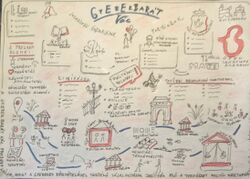 Concept Map of the Living Lab
 -
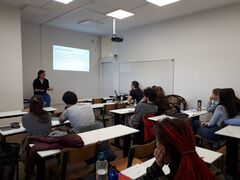 Introducting the Oral History Approach in a secondary school class
 -
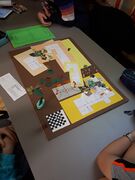 Urban games
 -
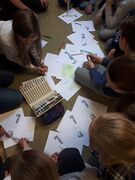 Visioning new school environments


