Democratic Landscape Transformation 2025 - Team 12
>>> Back to working group overview
>>> Back to seminar reading list, session materials & recordings
>>> go to the Editing Help
Seminar process at a glance

Background of your team
Please present your team briefly. Which linguistic and cultural perspectives does each member bring in? Which disciplinary backgrounds are present in your team? Note: if you prefer to stay anonymous on this wiki, you can also use initials only or a nick name
- Keida Kasa, originally from Tirana, Albania. Currently pursuing a 2-year master’s degree in Architecture and Creative Practices for the City and the Landscape at the University of Bologna. I bring a Southern European and Balkan cultural perspective to the team, with native knowledge of Albanian and fluency in English and Italian. My academic background is in architecture and urban planning, and I’m particularly interested in adaptive reuse, sustainable design, and how architecture can respond to social and cultural contexts.
- Vishnu Priyaa A, I am from Tamil Nadu, India. I am pursuing an International Master's in Landscape Architecture at Hochschule für Wirtschaft und Umwelt (HfWU) Nürtingen, Germany. I introduce the social value, beliefs, and cultural values of India (More specifically Southern India), with a native language of Tamil and fluency in English. I believe "the space we live in has a greater impact on our quality of life" With this intention, I completed my Bachelor's in Architecture(B.Arch) in India.
- Ahmad Raza,I am a Pakistani landscape architect who is presently enrolled at Nürtingen-Geislingen University (HfWU), Germany, to pursue a Master's degree in International Landscape Architecture. In addition to my professional background in site planning, sustainable design, and 3D visualisation, I hold a Bachelor of Science in Landscape Architecture. Ecological integration, community-based design, and GIS-based spatial planning are the main topics of my research and freelancing. I have a strong desire to design green, welcoming areas that tackle social and environmental issues.
- Nguyen Kieu Tien Le, I am from Ho Chi Minh City, Vietnam. I am currently studying International Master's in Landscape Architecture at Hochschule für Wirtschaft und Umwelt (HfWU) Nürtingen, Germany. I bring a Southeast Asian perspective to the team — particularly from Vietnam, a place shaped by cultural intersections and spatial as well as material diversity. My native language is Vietnamese, and I am fluent in English and conversational in Chinese. I hold a Bachelor's degree in Landscape Architecture and am especially interested in sustainable design, as well as flexibility in spatial use and function.
- Md. Irfan Hossain, I am from Bangladesh. I have complited my Bachelor in Architecture from Khulna University, Bangladesh. I am currently pursuing my Master of Science in Human Settlement (MScHS) at the same institution. In addition to my academic pursuits, I hold the position of Lecturer of the Architecture Department of Gopalganj Science and Technology University, Gopalganj, Bangladesh. Throughout my academic and professional journey, I have been actively engaged in diverse research areas, including Urban public space, Riverfront public space, Affordable housing, and Sustainable water and sanitation.
Your Landscape Democracy Manifestoes (Phase A)
Here you can add here the links to the manifestoes you have presented on April 23. Please make sure that the links are accessible. You can also add them directly here on the wiki, they need to be png or jpg format then.
- Keida Kasa, https://drive.google.com/file/d/1LuS7aLFoQuxf_mZUzu_Xy3jog4tTIbLa/view
- Vishnu Priyaa Adhi Sundar Rajan,https://drive.google.com/file/d/1_IXvkIZ6zzUP-_oy5PLHsYNWuLmBluuP/view
- Ahmad Raza,https://drive.google.com/file/d/1AVZlYhknvATi9rfDzeOegsjxkATCkzPq/view?usp=sharing
- Nguyen Kieu Tien Le, https://drive.google.com/file/d/15-IWU9t3kQhAYzZTqmMyFKSbuwqabNIf/view?usp=sharing
- Md. Irfan Hossain, https://drive.google.com/file/d/1-PbMYhHOQ5aaWT483GyYyluVMnAcdL_D/view?usp=sharing
Entering the Process: Activism, Community and Power (Phase B)
Global Landscape Democracy Role Models and Design Activism
- Due: May 14
At the beginning of phase B we ask you to identify people who are already active for democratic landscape transformation. These can be planners and designers, NGOs, collectives or activists, or people operating creatively at the interface of these categories. 'Design activism' is a possible overarching category. We created a list some time ago, but it has a very US/European focus, due to the history of our project. We really want to expand this and hope you can bring in new people and movements from around the globe.
On May 14, every team member introduces a landscape democracy activist/or design activist individual or group. Please add the people you introduced, you may also add the presentation material used with a downloadable link:
- Vishnu Priyaa A, https://drive.google.com/file/d/13IDoRpa0dzZEnpaSpz_KX7a4sVeeI6xG/view?usp=sharing
- Ahmad Raza, https://drive.google.com/file/d/1nsiWOsUMq_tLQXV8YwZNjcJHc_et8V-c/view?usp=sharing
- Nguyen Kieu Tien Le, https://drive.google.com/file/d/1pMjUCJeOYOX6B7UcV-HgnGWj7tWpPjA6/view?usp=sharing
- Md. Irfan Hossain, https://drive.google.com/file/d/1ik4qjgc4JSnQ22qbJxcyCEBKLZ3bJ74g/view?usp=sharing
Your Team's Landscape Democracy Challenge (Phase B)
- Due: May 21
Context and Location
The Nabinagar Canal, an important tributary of the Mayur River, serves a crucial function in controlling stormwater and drainage across Khulna city's urban landscape, situated in coastal Bangladesh. Passing through densely populated central areas, the canal holds significant importance in maintaining the city’s hydrological balance and supporting its environmental infrastructure.
Landscape and Community Map
Present here a visual representation of the landscape and community context of the area. What are the main spatial features? Which actors can you identify and how are they related to the area? Which values exist and for whom? What is at risk and why? Try to generate creative/conceptual/synthetic representation
Power Map
Based on the landscape and community context depicted above: How is power distributed? Who and what has a lot of power? Who and what has no power? Who and what is strongly affected by the landscape democracy challenges? Who and what is less affected? Are these actors connected or disconnected? Any veto-players known? Try to generate creative/conceptual/synthetic representation


Your Team's Landscape Democracy Vision and Ideas (Phase C)
- Due: June 18
Collective Vision
Our vision is to make the Nabinagar canal to be a placewhich is well maintained and be a land of diverse ecosystem . It also to be the platform where each species contribute each others survial and development to make the system better.We beleive such platforms can open up doors for various opportunities and new developmment.
Prototype 1: Dream Vista
The prototype Dream vista aims to help public visualize the canal with zero pollution and community spaces developed along the sides that engage them in various activities. It is planned to provide various design recommendations to people through virtual reality system which is set up in booth during local festivals and in public spots during week ends to collect public's suggestion and ideas. Basically the aim of this prototype is to offer public a visual pleasure of clean and developed canal which they haven't seen in real life for years. The curiosity and pleasure of experiencing the design stir public to contribute to the change.

Cross-cutting activity: Readings, concepts and definitions (Phases A - D)
- Due: July 2, 2025
While working in your group, please start to express your personal understanding of the relation of landscape and democracy in the form of a concept map with linking words or any other diagrammatic representation. Please make your maps very visual and not just verbal. Think critically about why one map differs from another.
The final product is a shared concept map that integrates the various understandings present within your team.
About concept mapping
Before starting the exercise you can read this article by Joseph D. Novak & Alberto J. Cañas about Theory Underlying Concept Maps and How to Construct and Use Them. This paper gives a good explanation of how concept maps are conceived and developed.
You can use any tool you like for producing your concept map. However, since the result needs to be submitted digitally we recommend the following open source software for producing your maps:
- Cmap Tools >>> you can also work with your group on the Cmap cloud doing a shared map
- VUE - The Visual Understanding Environment
- Use a shared whiteboard to develop your integrated concept map, such as MIRO or MURAL
How to present your concept maps
- Possible format: JPG (for wiki upload) or link to any other resource
- We give you below a draft image gallery where you can add pictures of your map (in JPG or PNG format)
- You can present your integrated understanding as one concept map or your present individual ones and the integrated one.
- add as many additional materials as you need
Overview of your concept maps (individiual and integrated)
-
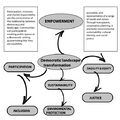 Ahmad's concept map
 -
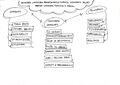 Tien's concept map
 -
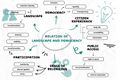 Keida's concept map
 -
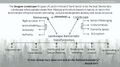 Vishnu's concept map
 -
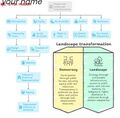 Irfan's concept map


Short reflection (Phase D)
Due: July 9, 2025
Throughout the collabration, Our team shared similar thoughts and understanding on Democratic Landscape Transformation. This opened doors to the discussions of various elements and factors that influence the transformation and development of a landscape. Apart from analysing and designing the landscape we gained a deep understanding on how the community,power and authority works as a system.Despite being from different countries,culture and disciplines we share a common goal that a landscape should always undergo tranformation for the betterment of community. The process of transformation demands efforts and contribution of all authorities and soceity. The lectures and discussions from various speakers offered wonderful insights and it pushed us to refine our approach and thinking towards the landscape system.