Romagna Living Lab: Difference between revisions
| (22 intermediate revisions by the same user not shown) | |||
| Line 1: | Line 1: | ||
== | [[File:Community interaction.JPG||thumb|400px]] | ||
== Overview == | |||
The Romagna Living Lab in Ravenna served as the first OLA workshop site, hosted by the University of Bologna (Ravenna seat) and Fondazione Flaminia from July 25–31, 2023. The workshop involved 45 international participants from the OLA universities and NGOs across Europe and the US. The theme, “Against all odds – Defying future through participatory design”, guided participants in exploring Ravenna’s diverse and layered landscape, including industrial ports, bird sanctuaries, flood-prone areas, and cultural heritage sites like the mosaics of Sant’Apollinare Nuovo. | |||
'''Romagna Living Lab Team:''' [http://OLA_Project_Team#Italy:_Alma_Mater_Studiorum_University_of_Bologna_(university_partner)_and_Fondazione_Flaminia_(NGO_partner) Find out more about the people behind] | |||
Workshop activities included collaborative fieldwork, community engagement, team-building, urban explorations, and prototyping. Mixed teams developed landscape democracy concepts, such as: | |||
*Mortar between the tiles: a regional landscape park connecting city and coast. | |||
*Lucidarsena: a light festival to engage the community in redeveloping the Darsena port area. | |||
*AdattAzione: a community-based flood- and drought-resilient Ravenna. | |||
*Ravenna Links: a methodical approach to co-create landscape knowledge with local stakeholders. | |||
*Poweract: mainstreaming participatory innovation via social entrepreneurship. | |||
Follow-ups and multiplier events further consolidated the living labs' impact. On November 25, 2023, “Fare città insieme” engaged local planners, NGOs, and professional associations in participatory activities. In May 2025, “Patrimonio Pubblico in Trasformazione” in Bologna involved 165 participants in co-reflecting on public asset transformation, integrating the OLA Charta in practice. | |||
The Living Lab later focused on Renewable Energy Communities (CER/REC). Two complementary formats were developed: | |||
*An online Living Lab, facilitating dialogue among local administrations, cooperatives, and associations to exchange experiences on CER development. | |||
*An on-site Living Lab in Cento, supporting participatory deliberation on legal forms, governance, and democratic decision-making for the emerging energy community. | |||
The Romagna Living Lab exemplified how participatory design, community engagement, and transdisciplinary collaboration can foster both local sustainability and democratic landscape transformation, while providing transferable methods for other Living Labs. | |||
== First OLA Workshop in Ravenna: Against all odds - Defying future through participatory design == | |||
*Kick-off for the Romagna Living Lab | *Kick-off for the Romagna Living Lab | ||
*Workshop hosts: University of Bologna (Ravenna Seat) and Fondazione Flaminia in Ravenna | *Workshop hosts: University of Bologna (Ravenna Seat) and Fondazione Flaminia in Ravenna | ||
* Workshop dates July 25 – 31, 2023 | * Workshop dates July 25 – 31, 2023 | ||
'''Impressions from the first OLA workshop in Ravenna, July 2023:''' | |||
<gallery widths="250" heights="180"> | <gallery widths="250" heights="180"> | ||
File:Ravenna darsena landscape.JPG|The Darsena canal landscape is open for urban regeneration | File:Ravenna darsena landscape.JPG|The Darsena canal landscape is open for urban regeneration | ||
| Line 13: | Line 35: | ||
File:Team builing ravenna.JPG|Team building in Ravenna's public park | File:Team builing ravenna.JPG|Team building in Ravenna's public park | ||
File:Community interaction.JPG|Collaborative analysis with the local community | File:Community interaction.JPG|Collaborative analysis with the local community | ||
File:Urban safari ravenna.JPG|Exploring the urban landscape | |||
File:Seaturtles.jpg|We discovered a hospital for sea turtles in a former fish auction hall | |||
File:Karmelitian monestary.jpg|After our conversation with the nuns of Monastero Santo Stefano Delle Monache Carmelitane | |||
File:Team building ravenna 2.JPG|Defining starting points | |||
File:Prototyping ravenna.JPG|Prototyping as a participatory process | |||
File:Ngo visits.JPG|Visits from NGO partners | |||
File:Team work ravenna.JPG|Team work using multiple and creative methods | |||
File:First visions ravenna.JPG|First visions based on the nominal group technique process | |||
File:Final presentation.JPG|Impressions from our final presentation | |||
</gallery> | </gallery> | ||
==Context== | ===Context=== | ||
Ravenna, a city in the Italian region of Emilia-Romagna, impresses not only by its rich and unique history. It is a landscape full of inspiring contrasts. The industrial port with its global flows of goods finds itself next to precious bird sanctuaries. A long and sandy beach serves the recreation needs of the masses. In parallel, there is a lot of distinguished cultural heritage tourism. The delta landscape of the wide basin of the river Po has been managed and drained by humans over millennia. And yet, flood has become an increasingly threatening issue, as the most recent inundations from May 2023 have shown. Hotels and tourist accommodations exist in abundance, but except for the main holiday season, they are often vacant. At the same time, many social groups have a hard time finding a home they can afford. | Ravenna, a city in the Italian region of Emilia-Romagna, impresses not only by its rich and unique history. It is a landscape full of inspiring contrasts. The industrial port with its global flows of goods finds itself next to precious bird sanctuaries. A long and sandy beach serves the recreation needs of the masses. In parallel, there is a lot of distinguished cultural heritage tourism. The delta landscape of the wide basin of the river Po has been managed and drained by humans over millennia. And yet, flood has become an increasingly threatening issue, as the most recent inundations from May 2023 have shown. Hotels and tourist accommodations exist in abundance, but except for the main holiday season, they are often vacant. At the same time, many social groups have a hard time finding a home they can afford. | ||
| Line 22: | Line 53: | ||
The workshop was working under the theme: '''Against all odds - Defying future through participatory design.''' | The workshop was working under the theme: '''Against all odds - Defying future through participatory design.''' | ||
== Location of the Romagna Living Lab in Ravenna == | === Location of the Romagna Living Lab in Ravenna === | ||
{{#display_map: 44.42053763033639,12.209210284301738~Start of the Ravenna Canal; 44.480742999351136,12.273176303027604~Technopole - CIFLA | {{#display_map: 44.42053763033639,12.209210284301738~Start of the Ravenna Canal; 44.480742999351136,12.273176303027604~Technopole - CIFLA | ||
}} | }} | ||
== Workshop goals and outcomes == | === Workshop goals and outcomes === | ||
The goal of the workshop was to identify and articulate landscape democracy challenges in the Ravenna territory by field work and interaction with the local community. Mixed teams were formed and they all developed an individual approach to the task. | The goal of the workshop was to identify and articulate landscape democracy challenges in the Ravenna territory by field work and interaction with the local community. Mixed teams were formed and they all developed an individual approach to the task. | ||
| Line 39: | Line 70: | ||
'''Collaborative reflection''': please visit our [https://padlet.com/druggeri1/ola-2023-ravenna-summer-intensive-reflections-k3eoij551vuhdtae Ravenna Padlet] | '''Collaborative reflection''': please visit our [https://padlet.com/druggeri1/ola-2023-ravenna-summer-intensive-reflections-k3eoij551vuhdtae Ravenna Padlet] | ||
== Synthesis of concepts and transferable ideas == | === Synthesis of concepts and transferable ideas === | ||
<gallery widths="200" heights="300"> | <gallery widths="200" heights="300"> | ||
File:A3 FOR PRINT AdattAzione.jpg|Team AdattAzione | File:A3 FOR PRINT AdattAzione.jpg|Team AdattAzione | ||
| Line 48: | Line 79: | ||
</gallery> | </gallery> | ||
== Workshop Teams == | === Workshop Teams === | ||
<gallery widths="400" heights="250"> | <gallery widths="400" heights="250"> | ||
| Line 75: | Line 106: | ||
The summer workshop contributed to an initial exploration of participatory approaches to territorial transformation in Ravenna. | The summer workshop contributed to an initial exploration of participatory approaches to territorial transformation in Ravenna. | ||
=== November | === November 25, 2023: “Fare città insieme” === | ||
The OLA team met again in Ravenna on November | The OLA team met again in Ravenna on November 25, 2023, during the dissemination event titled “Fare città insieme”, which involved local planners, designers, NGO representatives and professional associations. The event provided a space for discussion on participatory approaches to urban and territorial transformation, building on the outcomes of the previous workshop. | ||
The dissemination event also functioned as a practical exercise in the use of democratic participation techniques. Participants were directly involved in a guided participatory activity based on the “Watch Your Values” method, later formalised as one of the project’s method cards, to collectively reflect on values, priorities and approaches to territorial transformation. | The dissemination event also functioned as a practical exercise in the use of democratic participation techniques. Participants were directly involved in a guided participatory activity based on the “Watch Your Values” method, later formalised as one of the project’s method cards, to collectively reflect on values, priorities and approaches to territorial transformation. | ||
| Line 83: | Line 114: | ||
*[https://ilias.hfwu.de/goto.php?target=file_43349_download&client_id=hfwu Download synthesis of reflections resulting from the multiplier event] (in Italian) | *[https://ilias.hfwu.de/goto.php?target=file_43349_download&client_id=hfwu Download synthesis of reflections resulting from the multiplier event] (in Italian) | ||
Some impressions from the first multiplier event: | '''Some impressions from the first multiplier event in Ravenna, November 2024:''' | ||
<gallery widths="300" heights="200"> | <gallery widths="300" heights="200"> | ||
| Line 95: | Line 126: | ||
</gallery> | </gallery> | ||
=== May 15 - 16, 2025: Patrimonio Pubblico in Trasformazione === | |||
In May 2025, a second multiplier event titled “Patrimonio Pubblico in Trasformazione” was held in Bologna. The event brought together about 165 participants from different European contexts, including public administrations, professionals, researchers and civil society actors, to discuss participatory approaches to the reuse and transformation of public assets. Representatives from the Municipality of Bologna, the Metropolitan City and the Emilia-Romagna Region participated in the discussions, which were characterised by a high level of engagement and interaction among participants. | |||
The second multiplier event played a key role in the dissemination of the [https://www.openlandscapeacademy.org/vision OLA Charta]. During Patrimonio Pubblico in Trasformazione, the OLA Charta was disseminated through printed copies included in the event materials and used as a basis for collective reflection, with participants actively contributing to the identification and mapping of values relevant to public asset transformation processes. | |||
Some impressions from the 2nd multiplier event in Bologna, May 2025 | '''Some impressions from the 2nd multiplier event in Bologna, May 2025''' | ||
<gallery widths="300" heights="200"> | <gallery widths="300" heights="200"> | ||
File: | File:OLA Multiplier 2 Romagna (1).JPG | ||
File: | File:OLA Multiplier 2 Romagna (2).JPG | ||
File: | File:OLA Multiplier 2 Romagna (3).JPG | ||
File: | File:OLA Multiplier 2 Romagna (4).JPG | ||
File: | File:OLA Multiplier 2 Romagna (5).JPG | ||
File: | File:OLA Multiplier 2 Romagna (6).JPG | ||
</gallery> | </gallery> | ||
== Renewable Energy Community Living Labs == | |||
Living Labs | |||
In the following phase of the project, the focus of the Living Lab evolved in response to emerging regional opportunities and policy frameworks. While initial discussions included themes such as soft mobility and cycling infrastructures, subsequent project activities shifted towards Renewable Energy Communities (CER/REC), following the launch of a regional call that was considered more closely aligned with the project’s interest in democratic landscape transformation. | In the following phase of the project, the focus of the Living Lab evolved in response to emerging regional opportunities and policy frameworks. While initial discussions included themes such as soft mobility and cycling infrastructures, subsequent project activities shifted towards Renewable Energy Communities (CER/REC), following the launch of a regional call that was considered more closely aligned with the project’s interest in democratic landscape transformation. | ||
| Line 123: | Line 151: | ||
In parallel, an on-site Living Lab was developed in Cento following the initiative of a small community of Augustinian nuns. The Living Lab provided facilitation support for participatory discussion processes, focusing in particular on enabling collective reflection and decision-making around the legal form and governance structure of the Renewable Energy Community, and fostering democratic deliberation and shared governance practices within the emerging community. | In parallel, an on-site Living Lab was developed in Cento following the initiative of a small community of Augustinian nuns. The Living Lab provided facilitation support for participatory discussion processes, focusing in particular on enabling collective reflection and decision-making around the legal form and governance structure of the Renewable Energy Community, and fostering democratic deliberation and shared governance practices within the emerging community. | ||
'''Impressions from the Cento Living Lab:''' | |||
<gallery widths="300" heights="200"> | |||
File:Cento OLA 1 (1).jpg | |||
File:Cento OLA 1 (2).jpg | |||
File:Cento OLA 1 (3).jpg | |||
File:Cento OLA 1 (4).jpg | |||
</gallery> | |||
'''Location of the Cento Living Lab:''' | |||
{{#display_map: 44.72772649430286,11.290308605419401~Cento Renewable Energy Community | |||
}} | |||
== ERASMUS+ Programme & Partners== | == ERASMUS+ Programme & Partners== | ||
Latest revision as of 12:40, 19 December 2025

Overview
The Romagna Living Lab in Ravenna served as the first OLA workshop site, hosted by the University of Bologna (Ravenna seat) and Fondazione Flaminia from July 25–31, 2023. The workshop involved 45 international participants from the OLA universities and NGOs across Europe and the US. The theme, “Against all odds – Defying future through participatory design”, guided participants in exploring Ravenna’s diverse and layered landscape, including industrial ports, bird sanctuaries, flood-prone areas, and cultural heritage sites like the mosaics of Sant’Apollinare Nuovo.
Romagna Living Lab Team: Find out more about the people behind
Workshop activities included collaborative fieldwork, community engagement, team-building, urban explorations, and prototyping. Mixed teams developed landscape democracy concepts, such as:
- Mortar between the tiles: a regional landscape park connecting city and coast.
- Lucidarsena: a light festival to engage the community in redeveloping the Darsena port area.
- AdattAzione: a community-based flood- and drought-resilient Ravenna.
- Ravenna Links: a methodical approach to co-create landscape knowledge with local stakeholders.
- Poweract: mainstreaming participatory innovation via social entrepreneurship.
Follow-ups and multiplier events further consolidated the living labs' impact. On November 25, 2023, “Fare città insieme” engaged local planners, NGOs, and professional associations in participatory activities. In May 2025, “Patrimonio Pubblico in Trasformazione” in Bologna involved 165 participants in co-reflecting on public asset transformation, integrating the OLA Charta in practice.
The Living Lab later focused on Renewable Energy Communities (CER/REC). Two complementary formats were developed:
- An online Living Lab, facilitating dialogue among local administrations, cooperatives, and associations to exchange experiences on CER development.
- An on-site Living Lab in Cento, supporting participatory deliberation on legal forms, governance, and democratic decision-making for the emerging energy community.
The Romagna Living Lab exemplified how participatory design, community engagement, and transdisciplinary collaboration can foster both local sustainability and democratic landscape transformation, while providing transferable methods for other Living Labs.
First OLA Workshop in Ravenna: Against all odds - Defying future through participatory design
- Kick-off for the Romagna Living Lab
- Workshop hosts: University of Bologna (Ravenna Seat) and Fondazione Flaminia in Ravenna
- Workshop dates July 25 – 31, 2023
Impressions from the first OLA workshop in Ravenna, July 2023:
-
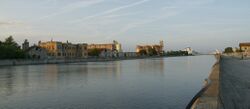 The Darsena canal landscape is open for urban regeneration
 -
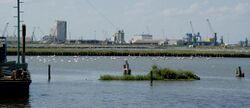 Ravenna harbour and bird sanctuaries are interlinked
 -
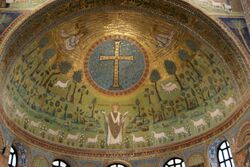 Invaluable cultural heritage: the mosaics of Sant’Apollinare Nuovo
 -
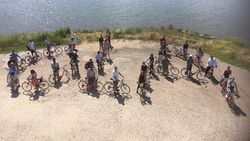 Exploring a multilayered landscape
 -
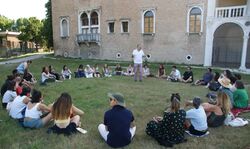 Team building in Ravenna's public park
 -
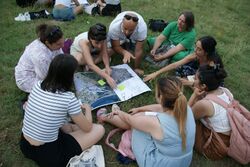 Collaborative analysis with the local community
 -
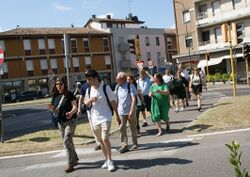 Exploring the urban landscape
 -
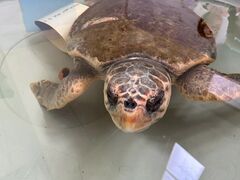 We discovered a hospital for sea turtles in a former fish auction hall
 -
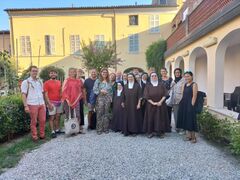 After our conversation with the nuns of Monastero Santo Stefano Delle Monache Carmelitane
 -
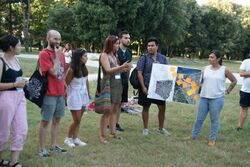 Defining starting points
 -
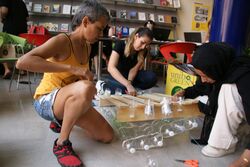 Prototyping as a participatory process
 -
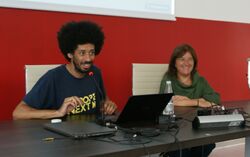 Visits from NGO partners
 -
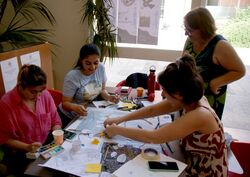 Team work using multiple and creative methods
 -
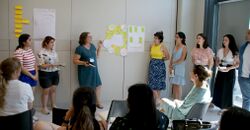 First visions based on the nominal group technique process
 -
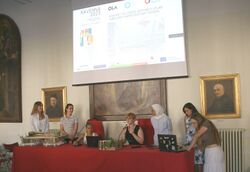 Impressions from our final presentation


Context
Ravenna, a city in the Italian region of Emilia-Romagna, impresses not only by its rich and unique history. It is a landscape full of inspiring contrasts. The industrial port with its global flows of goods finds itself next to precious bird sanctuaries. A long and sandy beach serves the recreation needs of the masses. In parallel, there is a lot of distinguished cultural heritage tourism. The delta landscape of the wide basin of the river Po has been managed and drained by humans over millennia. And yet, flood has become an increasingly threatening issue, as the most recent inundations from May 2023 have shown. Hotels and tourist accommodations exist in abundance, but except for the main holiday season, they are often vacant. At the same time, many social groups have a hard time finding a home they can afford.
Against this background, the first international summer school of the OLA ERASMUS consortium took place from July 25 – 31, 2023, hosted by the University of Bologna (at its Ravenna seat) and the Flaminia Foundation. This NGO focusses on transferring scientific knowledge from the University of Bologna to the Romagna province. The international participants came from lead partner Nürtingen-Geislingen University as well as from Weihenstephan-Triesdorf University of Applied Sciences in Germany, the Agricultural University of Athens in Greece, the Hungarian University of Agriculture and Life Sciences in Hungary and the University of Maryland in the US. The project consortium further includes the following NGO partners that have a lot of competence in participatory approaches: KulturAktiv from Hungary, Commonspace from Greece and the LE:NOTRE Institute from the Netherlands. Altogether, 45 participants attended over the nine workshop days.
The workshop was working under the theme: Against all odds - Defying future through participatory design.
Location of the Romagna Living Lab in Ravenna
Workshop goals and outcomes
The goal of the workshop was to identify and articulate landscape democracy challenges in the Ravenna territory by field work and interaction with the local community. Mixed teams were formed and they all developed an individual approach to the task.
During the workshop week, the following concepts have been generated:
- The group Mortar between the tiles declared the area along the canal as a regional landscape park ranging from the city to the coast. This idea was complemented by the design of a participatory model of how this park could be achieved
- Lucidarsena plays with the words ‘lucidar’ (giving light) and the toponyme ‘Darsena’ given to the old port area. The concept includes the development of a light festival as an attractive way of including local community in the redevelopment of Darsena.
- AdattAzione formulated the vision of a community-based flood and drought resilient and adaptive Ravenna region.
- Ravenna Links focused on identifying a good process and methodical approach towards building landscape knowledge, problem identification and ideation collaboratively with the local community.
- Poweract proposed mainstreaming the methodology of participatory community innovation through social entrepreneurship. The team exemplified the approach on the example of a container-based interim use. Please also listen to their audio presentation
Collaborative reflection: please visit our Ravenna Padlet
Synthesis of concepts and transferable ideas
-
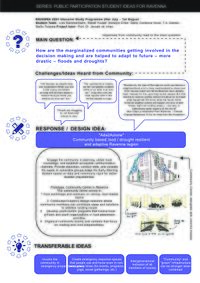 Team AdattAzione
 -
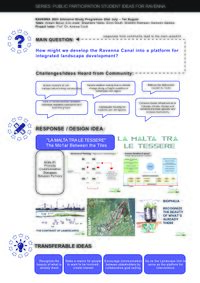 Team 'Mortar between the tiles
 -
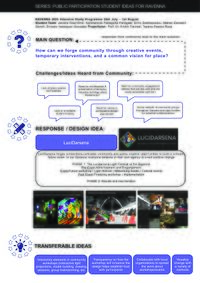 Team LuciDarsena
 -
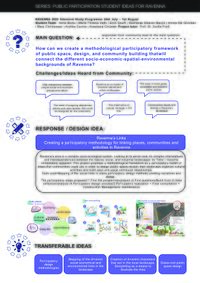 Team Ravenna's Links
 -
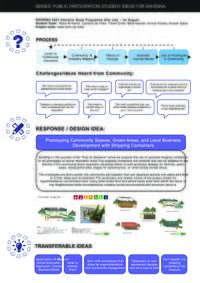 Team Power Act


Workshop Teams
-
 Team Poweract: Tímea Erdei (MATE, HU), Arnisa Piranej and Caroline de Vries (HfWU, DE), Arati Uttur (LNI), Maia Kessler (Uni Maryland, US), Aniseh Saber (UniBo,IT), Ruba Al Hamzi (HfWU, DE)
 -
 Team 'Mortar between the tiles: Shashank Yadav (HfWU, DE), Eve Josar (Uni Maryland, US), Shamim Rokhsari (HfWU, DE), Ansam Bzour (MATE, HU), Eirini (Agr. Uni Athens, GR)
 -
 Team Lucidarsena: Javiera Diaz-Ortiz (Uni Maryland, US), Tayana Passos (MATE; HU), Konstantina Panagiota (Agr. Uni Athens, GR), Ernesto Velasquez (HfWU, DE), Irene Stathopoulou (Commonspace, GR), Mahan Esmaeili Zavieh (HfWU, DE), Kristin Faurest (LNI, NL)
 -
 Team AdattAzione: Jeroen de Vries (LNI, NL), Auran Zaman (Uni Maryland, US), Lilla Kammermann (KulturAktiv, HU), Daisy Joval and Hüseyin Erten (HfWU, DE); Rahaf Yousef (MATE, HU), Stella Tsopelac(Agr. Uni Athens, GR)
 -
 Team Ravenna Links: Anastasia Christiaki (Commonspace, GR), Andrea Cavina (UniBo, IT), Maria-Thiresia Vathi and Eirini (Agr. Uni Athens, GR), Roshanak Gharavi Manjili and Armita Nik Ghorban, (HfWU, DE), Anna Borkó (MATE, HU), Mary Christensen (Uni Maryland, US), Zsófia Földi (MATE, HU)


Tutors and staff not on the team pictures:
- Luigi Bartolomei (overall coordination), University of Bologna, Italy
- Michael Venturelli (organisation & coordination), University of Bologna, Italy
- Ernesto Antonini, University of Bologna, Italy
- Lia Marchi, University of Bologna, Italy
- Deni Ruggeri, University of Maryland, US
- David Myers, University of Maryland, US
- Ellen Fetzer, Nürtingen-Geislingen University, DE (OLA project coordinator)
- Andrea Conti, LE:NOTRE Institute
- Angeliki Paraskevopoulou, Agricultural University of Athens, Greece

Follow-ups and Multiplier Events
The summer workshop contributed to an initial exploration of participatory approaches to territorial transformation in Ravenna.
November 25, 2023: “Fare città insieme”
The OLA team met again in Ravenna on November 25, 2023, during the dissemination event titled “Fare città insieme”, which involved local planners, designers, NGO representatives and professional associations. The event provided a space for discussion on participatory approaches to urban and territorial transformation, building on the outcomes of the previous workshop.
The dissemination event also functioned as a practical exercise in the use of democratic participation techniques. Participants were directly involved in a guided participatory activity based on the “Watch Your Values” method, later formalised as one of the project’s method cards, to collectively reflect on values, priorities and approaches to territorial transformation.
Some impressions from the first multiplier event in Ravenna, November 2024:


May 15 - 16, 2025: Patrimonio Pubblico in Trasformazione
In May 2025, a second multiplier event titled “Patrimonio Pubblico in Trasformazione” was held in Bologna. The event brought together about 165 participants from different European contexts, including public administrations, professionals, researchers and civil society actors, to discuss participatory approaches to the reuse and transformation of public assets. Representatives from the Municipality of Bologna, the Metropolitan City and the Emilia-Romagna Region participated in the discussions, which were characterised by a high level of engagement and interaction among participants.
The second multiplier event played a key role in the dissemination of the OLA Charta. During Patrimonio Pubblico in Trasformazione, the OLA Charta was disseminated through printed copies included in the event materials and used as a basis for collective reflection, with participants actively contributing to the identification and mapping of values relevant to public asset transformation processes.
Some impressions from the 2nd multiplier event in Bologna, May 2025
.JPG)
.JPG)
.JPG)
.JPG)
.JPG)
.JPG)
Renewable Energy Community Living Labs
In the following phase of the project, the focus of the Living Lab evolved in response to emerging regional opportunities and policy frameworks. While initial discussions included themes such as soft mobility and cycling infrastructures, subsequent project activities shifted towards Renewable Energy Communities (CER/REC), following the launch of a regional call that was considered more closely aligned with the project’s interest in democratic landscape transformation.
Two complementary Living Lab formats were developed. An online Living Lab was established as an informal space for dialogue among local administrations, cooperatives, associations and other stakeholders involved in the regional CER call. The meetings primarily functioned as a space for mutual exchange, peer comparison and reflection on ongoing difficulties and uncertainties, rather than as a technical or legal support service, as most participants were already assisted by their own consultants. In parallel, an on-site Living Lab was developed in Cento following the initiative of a small community of Augustinian nuns. The Living Lab provided facilitation support for participatory discussion processes, focusing in particular on enabling collective reflection and decision-making around the legal form and governance structure of the Renewable Energy Community, and fostering democratic deliberation and shared governance practices within the emerging community.
Impressions from the Cento Living Lab:
.jpg)
.jpg)
.jpg)
.jpg)
Location of the Cento Living Lab:
ERASMUS+ Programme & Partners
Funded by the European Union. Views and opinions expressed are however those of the author(s) only and do not necessarily reflect those of the European Union or the European Education and Culture Executive Agency (EACEA). Neither the European Union nor EACEA can be held responsible for them.
